


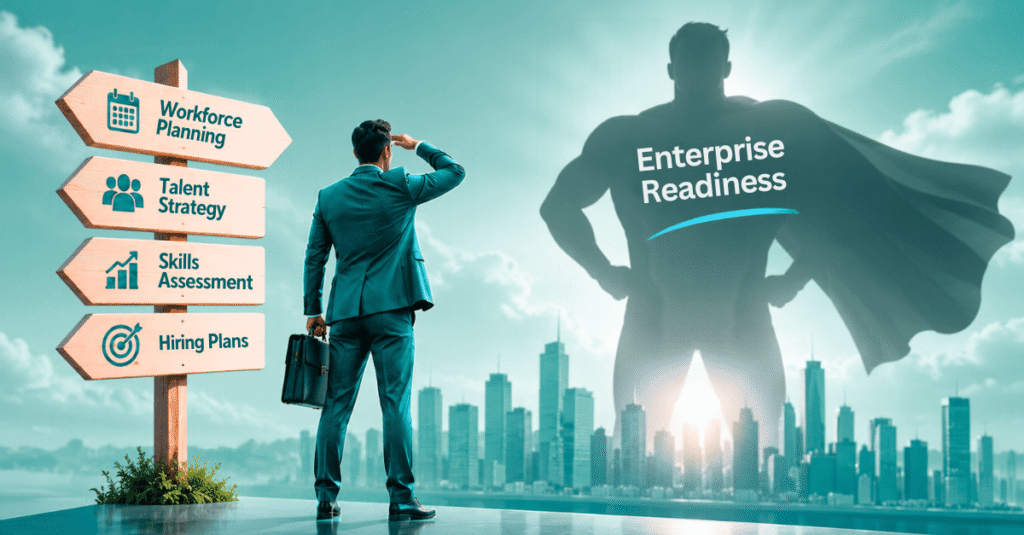
Embedded Workforce strategies are becoming increasingly important as organizations navigate changing business priorities, evolving technology, and unpredictable talent requirements. Yet, many companies still confuse workforce-planning activity with actual organizational readiness. Conducting talent reviews, updating workforce forecasts, introducing new technologies, and discussing future hiring needs may create the impression of progress. However, these activities do not automatically mean an organization is prepared to manage workforce transformation. The real challenge lies in connecting workforce decisions with business objectives, financial planning, employee capabilities, and future skill requirements. Without this alignment, organizations may have detailed workforce plans but lack the structure and capabilities needed to execute them successfully. As business environments become more complex, leaders must move beyond planning exercises and focus on building genuine enterprise readiness.
Embedded Workforce and the Gap Between Planning and Readiness
Workforce planning is often treated as an annual HR responsibility rather than an ongoing business strategy. Organizations may conduct headcount reviews, identify recruitment requirements, and discuss future talent needs without considering how these decisions affect broader business operations.
This creates a gap between workforce-planning activity and enterprise readiness.
Some common signs include:
- Workforce forecasts that are not connected to financial plans.
- Hiring strategies that do not reflect changing business priorities.
- Skills assessments without clear development plans.
- Limited collaboration between HR and business leaders.
- Workforce decisions based on outdated assumptions.
- Technology investments without clear implementation strategies.
Organizations may appear prepared because they have completed several planning activities. However, readiness requires more than documentation and discussions.
An effective Embedded Workforce approach connects talent decisions directly with business requirements, helping organizations understand what capabilities they need, where gaps exist, and how those gaps can be addressed. The objective is not simply to predict workforce demand. It is to prepare the organization to respond to it.
Workforce Strategy Requires Enterprise-Wide Alignment
A successful Workforce Strategy cannot operate independently of an organization’s broader business objectives. Recruitment, finance, operations, technology, and leadership teams must work together to understand how changing market conditions will influence future workforce requirements.
For example, the growing adoption of artificial intelligence is changing how organizations evaluate roles, responsibilities, and required capabilities. While businesses may introduce AI tools and discuss automation opportunities, many have yet to incorporate the expected workforce impact into enterprise-wide financial and workforce planning.
This creates several challenges:
- Uncertainty about future job requirements.
- Difficulty identifying emerging skill gaps.
- Limited understanding of workforce transformation costs.
- Misalignment between technology investments and talent capabilities.
- Delayed decisions about reskilling and recruitment.
When workforce planning remains isolated within HR, organizations risk making decisions without understanding their wider operational and financial consequences.
A connected Workforce Strategy allows leaders to evaluate talent requirements alongside business growth, technology adoption, and long-term organizational priorities. Enterprise readiness begins when every department understands its role in preparing the workforce for change.
Talent Assessment Must Go Beyond Current Capabilities
Traditional workforce assessments often focus on existing employee skills, experience, and performance. While these factors remain important, they do not necessarily reveal whether an organization has the capabilities required for future business demands.
Modern Talent Assessment must consider both current workforce strengths and emerging capability requirements.
Organizations should evaluate:
- Existing technical and functional capabilities.
- Skills required for upcoming business initiatives.
- Leadership and succession readiness.
- Employee adaptability and learning potential.
- Opportunities for reskilling and internal mobility.
- Critical positions that may become difficult to fill.
For instance, an organization planning to introduce advanced automation may have experienced employees who understand existing operations but lack the technical capabilities required to manage new systems.mWithout identifying these gaps early, businesses may face unexpected recruitment costs, productivity challenges, and implementation delays.
Effective Talent Assessment helps organizations understand the difference between the workforce they currently have and the workforce they will need. The real value of assessment comes from turning insights into measurable workforce decisions.
Strategic Talent and the Importance of Future Readiness
Building Strategic Talent capabilities requires organizations to move beyond immediate vacancies and focus on long-term workforce requirements. Many businesses concentrate heavily on filling open positions while overlooking the capabilities they will need six months or several years from now. This reactive approach can create talent shortages when business priorities change unexpectedly.
A stronger approach involves identifying critical roles, forecasting future skill requirements, developing internal talent, and creating external recruitment pipelines.
Organizations should also consider how technology, changing customer expectations, and industry developments may influence the demand for specialized professionals. By focusing on Strategic Talent, businesses can make more informed decisions about whether to hire externally, develop existing employees, or restructure workforce responsibilities.
This approach also encourages stronger collaboration between HR leaders and business stakeholders. Having the right people today is important, but preparing the right capabilities for tomorrow is what creates long-term organizational strength.
Growth Catalyst: Turning Workforce Planning into Business Readiness
A workforce plan becomes valuable only when it produces meaningful business outcomes. Organizations must translate workforce insights into practical actions that improve productivity, strengthen capabilities, and support sustainable growth.
This is where workforce planning can become a Growth Catalyst. Leaders can improve enterprise readiness by establishing clear priorities, assigning ownership, tracking workforce gaps, and regularly reviewing progress against business objectives.
Important areas of focus include connecting workforce forecasts with financial planning, establishing measurable talent development goals, improving collaboration between departments, and preparing recruitment strategies for emerging skill requirements. Organizations should also evaluate whether their workforce plans are producing actual improvements rather than measuring success through completed activities alone.
For example, conducting a skills assessment is an activity. Closing identified skill gaps through targeted development and recruitment is an outcome.
Similarly, discussing future hiring needs is planning. Building qualified talent pipelines before vacancies become urgent is readiness. The difference between these approaches determines whether workforce planning supports business transformation or simply creates the appearance of preparation.
How Pragna Solutions Supports Strategic Workforce Planning
At Pragna Solutions, we understand that successful workforce planning requires more than identifying immediate hiring requirements. Through our expertise in Embedded Workforce, Strategic Talent, and Talent Assessment, we help organizations strengthen their workforce strategies, identify critical talent requirements, and build recruitment approaches aligned with evolving business priorities. Our focus is on helping businesses connect talent acquisition with operational needs and long-term organizational growth.
Build an Enterprise-Ready Workforce with Pragna Solutions
If your organization is looking to strengthen its Workforce Strategy and turn workforce-planning activities into measurable business outcomes, Pragna Solutions can help. From identifying talent requirements to developing strategic recruitment and workforce solutions, we provide the expertise needed to improve workforce readiness, address capability gaps, and support sustainable growth.
📩 Connect with Pragna Solutions today and discover how the right workforce strategy can become a powerful Growth Catalyst for your organization.